
English as an Additional Language (EAL) refers to any student learning and using English as an additional or second language.
A pupil’s first language is any language other than English that a child was exposed to during early development and continues to be exposed to in the home or community.
If a child has been exposed to a language other than English, it is important for us to know, regardless of how well they now speak English.
EAL learners are a diverse group and there is a range of definitions for an EAL pupil:
- children who are growing up in bilingual families (having two languages spoken at home)
- children who have lived in UK a long time, or were born in the UK, but speak one language at home and another in school
- children who began life in another country, where another language was spoken, and who now live in the UK
We recognise that a pupil’s ability to thrive is linked to an inclusive environment where they feel valued and confident. As with other groups of learners, our teachers adapt their lessons to make sure that all learners can access the learning provided. They do this by involving learners in activities where the language is challenging but appropriate to their abilities and interests.

We understand that our pupils are all learning English at different stages and this is reflected in the adaptations and inclusive practices that underpin our approach to teaching and learning. We use effective systems to assess and develop pupils’ proficiency in English alongside classroom practices informed by high-quality research.
We want all of our pupils to achieve fluency in English – both at a social and an academic level and we value the extent that families contribute to this.
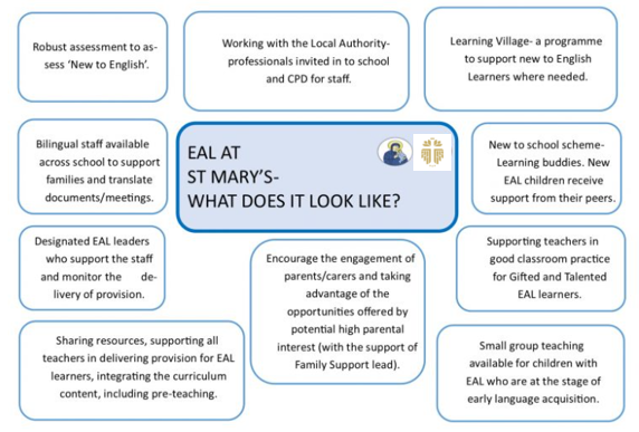
All school staff at St Mary’s work to support pupils at every stage of their academic journey. This support structure includes, but is not limited to:
- Supporting pupils as they settle into our school particularly through the use of a “Belonging Buddy”- a child who helps the new pupil to settle in.
- Focused teaching and interventions to ensure pupils have the opportunity to learn and develop their language skills with the support of expert staff.
- Inclusive classroom environments that provide good language role models, immersion in English and the opportunity to learn in a language-rich setting.
- Support from peers to ensure pupils feel included, valued and celebrated as a member of our school community.
- Training for staff to ensure they feel equipped and empowered to support pupils in their English learning experience.
There are lots of valuable online resources that can help support learning English as an additional language, but we also recognise and value the contributions families can make to developing pupils’ skills in home languages. A strong knowledge of the home language is absolutely crucial in developing pupils’ sense of their identity and accelerates their progress in learning English.

Guidance, Advice and Support
Download these short, easy to understand guides for parents of students who use English as an Additional Language (EAL) on how to get involved in school life and help their child to learn. The guides are available in the 22 most commonly used first languages in UK schools.
| EAL Parents Guidance: Helping Children Learn | |
| Guidance for parents of students who use EAL: About the English education system | |
| The Bell Foundation EAL Resource Library | |
| Teaching Resources | |
| The Bell Foundation offers a range of free resources to support EAL teaching and development within schools. | |
| Guidance Resources |
For information about our EAL learning resource called ‘Learning Village’ please view here.
Please find our EAL Policy here