 We are a Voice 21 School
Our oracy team




Our commitment to oracy
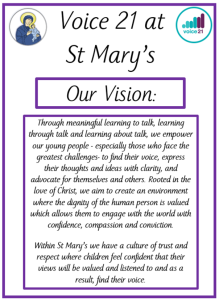
At St Mary’s, we believe that every child deserves a voice. Voice 21 provides a powerful, research-informed framework that helps us nurture confident, articulate and thoughtful speakers. Through structured oracy teaching, we empower our pupils to express themselves, listen deeply and engage meaningfully with the world.
Our Oracy aims at St Mary’s:
- Human Dignity – Develop confident, articulate speakers who express ideas clearly and respectfully, recognising the God‑given dignity of every person.
- Preferential Option for the Vulnerable – Ensure all pupils, including those with SEND or language barriers, have equitable access to high‑quality talk, prioritising those who may face barriers.
- The Common Good – Embed oracy across the curriculum so that speaking and listening strengthen learning for all, contributing to a flourishing school community.
- Solidarity – Cultivate a culture of trust, respect and active listening rooted in Gospel values, encouraging pupils to stand together in mutual support.
- Participation & Rights – Provide pupils with the skills to advocate for themselves and others, enabling them to participate fully and promote justice and dignity.
- Peace & Reconciliation – Strengthen pupils’ social, emotional and spiritual development through purposeful dialogue that nurtures empathy, understanding and peaceful relationships.
Why oracy matters
Oracy is more than speaking well – it is about:
- Communication skills that prepare children for learning and life.
- Confidence and self-esteem through purposeful talk.
- Critical thinking developed by reasoning, questioning and discussion.
- Inclusion ensuring every child’s voice is heard and valued.
Our oracy approach
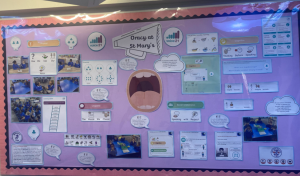
We embed Voice 21 strategies throughout daily school life:
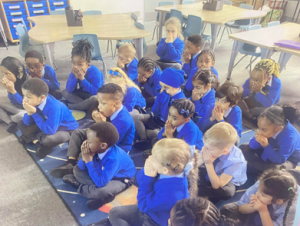
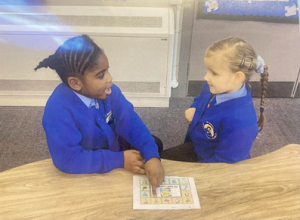
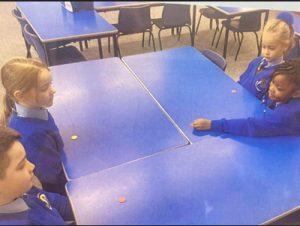
- Talk-rich classrooms through structured talk routines, sentence stems to support high-quality dialogue, listening skills taught explicitly and modelled by staff.
- Oracy in the curriculum through dialogic teaching across subjects, vocabulary development linked to speaking and listening, performance opportunities including assemblies, debates, drama and prayer & liturgy.
Oracy for character and faith
As a Catholic school, oracy supports our Trust and Diocesan mission by helping children to:
- Speak with kind hearts, showing empathy and respect.
- Develop questioning minds, exploring ideas with curiosity.
- Build a thirst for knowledge, engaging actively in learning.
- Advocate with a hunger for justice, using their voices for good.
The oracy framework
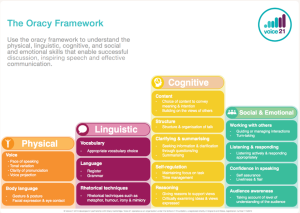
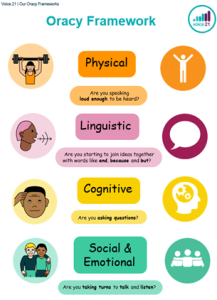
The Voice 21 Oracy Framework helps our staff and pupils understand what makes effective spoken communication. It identifies four key strands that work together to develop confident, articulate speakers:
| Strand | Focus | In practice at St Mary’s |
| Physical | Voice, tone, pace, and body language | Pupils learn how to project their voices clearly and use posture and gesture to communicate meaning. |
| Linguistic | Vocabulary, grammar, and rhetorical techniques | Teachers model rich language and encourage pupils to use precise vocabulary in discussions and presentations. |
| Cognitive | Organising ideas and reasoning | Children learn to structure arguments, justify opinions, and connect ideas logically. |
| Social and Emotional | Confidence, empathy, and collaboration | Pupils practise listening respectfully, taking turns, and valuing others’ perspectives. |
Inclusion and oracy
At St Mary’s, inclusion and oracy go hand in hand. Every child— regardless of background, need or starting point— has the right to be heard and understood. Through our Voice 21 approach, we create equitable opportunities for all pupils to develop their voice, participate in dialogue and share their ideas with confidence. Structured talk routines, visual supports and adaptive strategies ensure that children with additional needs or language barriers can access learning and contribute meaningfully. In our inclusive classrooms, talk becomes a bridge: it connects experiences, builds understanding, and celebrates the dignity of each person as a child of God.
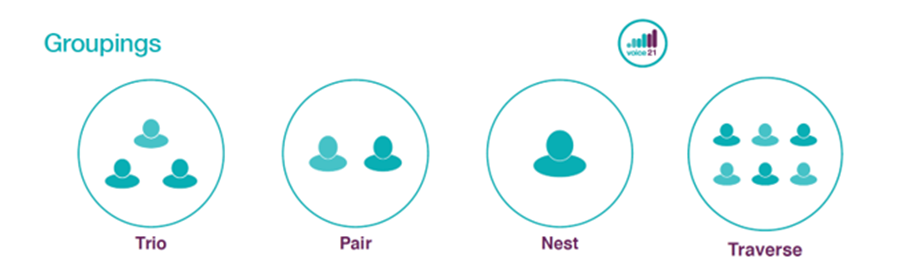
Our oracy groupings (in lessons)
Nesting:
Talk tactics:
Talk tokens:
Oracy in EYFS
Additional documents

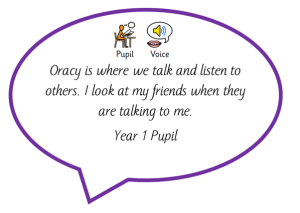
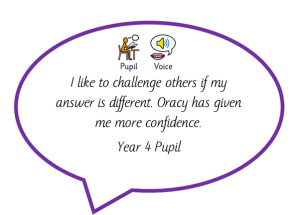
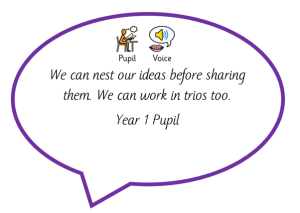
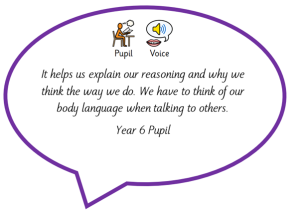
The impact of our oracy strategy – pupil voice: